Introduction to Mac Mini
The Mac Mini has long been admired for its compact design and powerful performance, making it a strong contender in the desktop computer market. With its ability to seamlessly integrate into any workspace, it caters to users who demand functionality without sacrificing aesthetics. As we delve into 2026, the Mac Mini continues to evolve, embracing cutting-edge technologies that meet the needs of creative professionals, gamers, and everyday users alike. When exploring options, mac mini offers comprehensive insights into its capabilities, making it a pivotal choice for anyone looking to enhance their computing experience.
What is the Mac Mini?
The Mac Mini is a miniaturized desktop computer designed by Apple that packs substantial power into a small footprint. Initially released in 2005, it has undergone numerous upgrades over the years, enhancing its performance and capabilities. The latest models, in 2026, are equipped with Apple’s own M1, M2, or M4 chips, which provide impressive processing abilities and energy efficiency. This makes the Mac Mini ideal for various applications, from basic tasks like web browsing and document editing to more demanding tasks such as video editing and 3D rendering.
Key Features of the Mac Mini
Among the many features offered by the Mac Mini, the following stand out:
- Compact Design: The Mac Mini’s small form factor allows it to fit into tight spaces while still delivering robust performance.
- Powerful Processors: The latest models feature Apple’s M1, M2, or M4 chips, providing optimized speed and efficiency.
- Versatile Connectivity: Multiple ports, including Thunderbolt 4, HDMI, and USB-C, enable easy connectivity with various devices and peripherals.
- High-Quality Graphics: The M1 and M2 chips come with integrated graphics that can handle demanding tasks with ease, making it suitable for creative professionals.
- Affordable Pricing: Compared to other Apple products, the Mac Mini offers a cost-effective solution for those seeking Apple’s ecosystem without breaking the bank.
Why Choose Mac Mini in 2026?
As we navigate through 2026, the Mac Mini stands out for reasons beyond its physical size. With the rise in remote work and digital collaboration, its ability to deliver powerful performance in a compact package makes it attractive for both individual users and businesses. Moreover, the Mac Mini supports a vast library of software applications optimized for Apple’s hardware, ensuring that users can engage in creative projects, gaming, and business tasks with ease.
Setting Up Your Mac Mini
Quick Installation Guide
Setting up your Mac Mini is a straightforward process that can be completed in a matter of minutes. Here’s how to do it:
- Unbox the Mac Mini and place it on a stable surface.
- Connect the power cable and plug it into an electrical outlet.
- Connect your monitor or TV using an HDMI or display adapter cable.
- Attach peripherals such as a keyboard and mouse via USB or Bluetooth.
- Turn on the Mac Mini and follow the on-screen instructions to complete the setup process.
Initial Configuration Steps
After the physical setup, configuring your Mac Mini for optimal performance is essential. Here are some initial setup steps:
- Create a User Account: Establish your primary user account to personalize your experience.
- Update Software: Ensure your macOS is up to date to benefit from the latest features and security updates.
- Configure Preferences: Adjust system preferences, such as display settings, energy-saving options, and user privacy settings.
- Install Essential Applications: Download necessary software like browser, productivity tools, and creative applications.
Optimizing Your Space for a Mac Mini
Given its compact design, the Mac Mini is ideal for users with limited desk space. To optimize your setup:
- Use Vertical Space: Consider a monitor stand to elevate your display and free up space beneath it.
- Organize Cables: Utilize cable management solutions to keep your workspace tidy and minimize clutter.
- Portable Monitor Options: Explore slim and lightweight monitors if you need to work on the go.
Maximizing Productivity with Mac Mini
Essential Software Integrations
The Mac Mini thrives when combined with powerful software tools that enhance productivity. Here are some essential integrations:
- Apple’s Productivity Suite: Utilize Pages, Numbers, and Keynote for document creation, spreadsheets, and presentations.
- Creative Software: Leverage programs like Final Cut Pro for video editing and Logic Pro for music production.
- Collaboration Tools: Integrate with tools like Slack, Microsoft Teams, and Zoom for seamless communication and project management.
- Cloud Services: Utilize iCloud or other cloud platforms to ensure your files are accessible from anywhere.
Automating Tasks with Mac Mini
Automation can significantly enhance your productivity with Mac Mini. Consider the following methods:
- Automator: Use macOS Automator to create workflows for repetitive tasks.
- Shortcuts: Implement the Shortcuts app to set up quick actions that streamline your daily processes.
- Third-Party Apps: Explore applications like Keyboard Maestro or Alfred for advanced automation capabilities.
Utilizing Multi-Monitor Setups
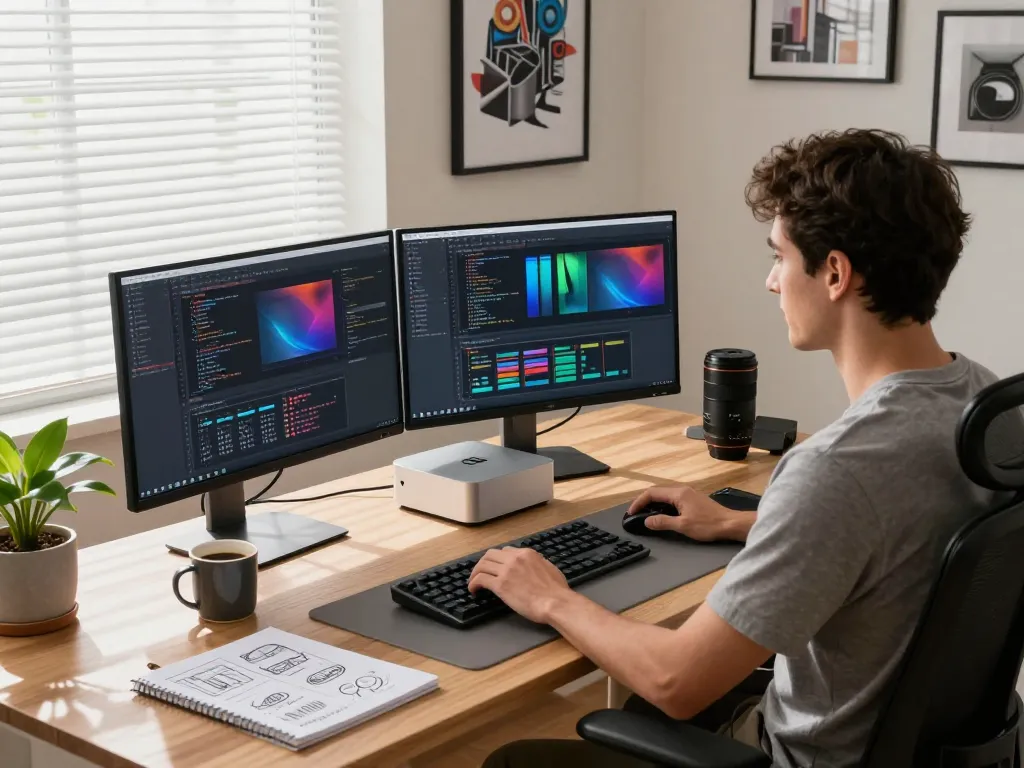
Many users benefit from connecting multiple monitors to their Mac Mini, allowing for expanded workspace and improved multitasking. Here’s how to set it up:
- Connect additional monitors via HDMI or Thunderbolt ports.
- Go to System Preferences and select Displays to arrange your monitors as desired.
- Utilize Spaces for virtual desktops, enabling you to organize projects across different screens.
Comparing Mac Mini to Other Systems
Mac Mini vs. Traditional PCs
When comparing the Mac Mini to traditional PCs, several key differences arise:
- Operating System: The Mac Mini runs macOS, known for its stability and user-friendly interface, whereas traditional PCs typically use Windows or Linux.
- Performance: Apple’s M-series chips are designed for efficiency, often outperforming equivalent PC processors, especially in creative applications.
- Integration: The Mac Mini benefits from seamless integration within the Apple ecosystem, facilitating smooth interaction with iPhones, iPads, and other devices.
Cost-Effectiveness of Mac Mini
The Mac Mini presents an attractive price point compared to other Apple products, particularly when considering its performance. For users seeking high-quality computing without the premium price tag of a MacBook Pro or iMac, the Mac Mini is a fitting choice. Additionally, the potential for hardware upgrades further enhances its cost-effectiveness in the long term.
User Experience: Mac Mini vs. Competitors
User experience plays a significant role in the appeal of the Mac Mini. While competitors may offer similar specifications, the smoothness of macOS and Apple’s focus on user experience set the Mac Mini apart. Features like Universal Control, AirDrop, and Continuity Camera provide advantages that competitors struggle to replicate, enhancing productivity and ease of use.
Real-World Use Cases for Mac Mini
Creative Professionals Using Mac Mini
Creative professionals, including graphic designers, video editors, and musicians, benefit immensely from the Mac Mini’s capabilities. With access to high-performance software and excellent graphics processing, users can engage in demanding tasks without lag or performance issues. The compact nature of the Mac Mini also means it can fit seamlessly into any studio or workspace.
Gaming with Mac Mini: Is It Viable?
While the Mac Mini is not primarily marketed as a gaming machine, it is capable of running many games efficiently. With the latest M-series chips, the Mac Mini handles graphics-intensive games better than many traditional PCs. Users can also leverage cloud gaming services, allowing them to play more demanding titles without solely relying on hardware capabilities.
Mac Mini in Business Settings
Businesses can harness the power of the Mac Mini for various tasks, from running applications to managing communications. Its ability to connect with various peripherals and support essential software enables it to be a versatile tool in a professional environment, enhancing productivity and collaboration.
What are the unique benefits of using a Mac Mini?
The unique benefits of the Mac Mini include:
- Compact Size: Its small footprint allows for easy placement in any environment.
- High Performance: With the M-series chips, users can expect superior speed and efficiency.
- Affordable: Offers a more budget-friendly option within the Apple ecosystem.
- Versatile Usage: Suitable for home, creative, and business applications.
How does Mac Mini compare to other Apple products?
Comparing the Mac Mini to other Apple products like the iMac and MacBook Pro reveals several distinctions. While the iMac offers an all-in-one experience with a built-in display, the Mac Mini allows users the flexibility to choose their monitor. The MacBook Pro is portable but comes at a higher price. The Mac Mini offers powerful performance without the premium cost associated with other Apple products.
Is Mac Mini suitable for gaming in 2026?
Yes, the Mac Mini can be suitable for gaming in 2026, particularly with the capabilities of the latest M-series chips. While it may not replace dedicated gaming PCs, it can run many popular titles smoothly and efficiently. Additionally, advances in gaming technology, including cloud gaming services, further enhance its viability as a gaming option.
What software runs best on Mac Mini?
Software that runs exceptionally well on the Mac Mini includes:
- Final Cut Pro: Ideal for video editing with optimized performance on M-series chips.
- Logic Pro: A go-to for music production, offering advanced features and seamless integration.
- Adobe Creative Suite: Popular applications like Photoshop and Illustrator perform exceptionally with the Mac Mini.
Can I upgrade my Mac Mini?
While the memory and storage were previously upgradeable in older models, the latest iterations of the Mac Mini come with soldered components, making upgrades more challenging. However, users can increase storage through external SSDs and manage software performance through system optimization techniques.